On May 29, 2012, the New York Times published a long report (based on interviews with three dozen current and former Obama administration advisers) revealing how President Obama personally authorizes every drone strike against individuals suspected of being terrorists. Every Tuesday, the President, with two dozen counterterrorism officials, pore over mug shots and biographies of each suspect. The goal of these meetings is to determine which of these suspects is enough of a national security threat to warrant kill or capture — of which, the New York Times puts it, “the capture part has become largely theoretical”. As I read the article, I couldn’t help but think of the popular Japanese manga “Death Note” (which also became an anime series, a live-action film, and was banned in China). “Death Note” is a perfect allegory for the insidious moral implications of Obama’s targeted killing policy. Read the rest of this entry »
Category Archives: War & Peace
“Death Note” and Obama’s Kill List
Posted by Adam Hudson on June 8, 2012 in Civil Rights/Liberties, Drones/Drone warfare, Human Rights, International Law, International Relations, Irregular warfare & covert operations, Pakistan, Somalia, Targeted killing, War & Peace, Yemen
Tags: al-Qaeda, anime, AQAP, CIA, civil liberties, Death Note, drone strikes, drones, Human Rights, Kill List, Light Yagami, manga, New York Times, Obama, Obama Kill List, Pakistan, Somalia, targeted killing, terrorism, U.S. Constitution, War on Terror, Yemen
Kony 2012 — propaganda for U.S. militarism in Africa
Within a matter of days, the film “Kony 2012”, put out by the NGO Invisible Children (IC), went viral. In the beginning, the film highlights the brutality of the Lord’s Resistance Army (LRA), a Christian militia group in Uganda led by a man named Joseph Kony. The LRA is known for committing massive human rights violations, such as using child soldiers, murder, mutilation, abduction, and sexual enslavement of women and children. Most of the film, though, focuses on IC’s efforts to bring Kony to justice and encourages viewers to take part in the campaign. What IC explicitly advocates is U.S. military intervention in Uganda to apprehend Joseph Kony.
I could not help but cringe as I watched this film. For one, it reeked of a disturbing white savior undertone. Ugandans were not portrayed as agents of their own liberation. Rather, they (particularly the young boy Jacob) were portrayed as helpless victims in need of Western do-gooders to save them with charity rather than solidarity and empowerment. As an African-American, I could not help but be offended by this. Many Read the rest of this entry »
Share this:
Posted by Adam Hudson on March 26, 2012 in Activism & Social Change, Africa, African/African-American history/politics/issues, Empire/Hegemony, International Relations, Military-industrial complex, war economy, & war profiteering, War & Peace
Tags: Africa, AFRICOM, Barack Obama, Congo, Democratic Republic of Congo, DRC, imperialism, Invisible Children, Kony, Kony 2012, militarism, Obama, Rwanda, Uganda
Liberal support for war and human rights abuses
A recent Washington Post-ABC News poll reveals something quite depressing. The poll shows that a majority of Americans, including many Democrats, support President Obama’s counterterrorism policies of keeping Guantanamo Bay prison open and drone strikes against suspected terrorists abroad. These are policies that Obama and many liberals criticized Bush for doing. But now that Obama is carrying them out, there’s ample support these policies.
Share this:
Posted by Adam Hudson on February 19, 2012 in Civil Rights/Liberties, Drones/Drone warfare, Empire/Hegemony, Guantanamo, Human Rights, International Law, International Relations, Irregular warfare & covert operations, Military-industrial complex, war economy, & war profiteering, Targeted killing, Torture, War & Peace
Tags: civil liberties, constitutional rights, drones, Gitmo, Guantanamo Bay, Guantanamo Bay prison, Human Rights, International Law, liberal, liberalism, Obama, Torture, War, war crimes
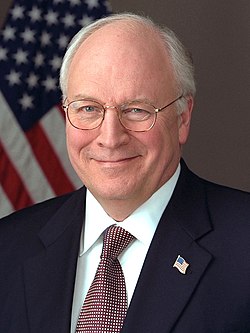
Time to prosecute Dick Cheney
Lately, former Vice President Dick Cheney has been doing a massive publicity tour for his memoir. The book focuses on his long career in politics, including the infamous decisions he made (i.e., war crimes committed) during his time in the Bush administration. Throughout his media tour, he has been defending his vice presidency and the decisions he made. In an interview on NBC News Dateline, Cheney defended “enhanced interrogation” (a political euphemism for torture), waterboarding (a torture technique), wiretapping, and using secret prisons. However, it is important to remind ourselves of the Bush administration’s sheer criminality and Cheney’s participation in it.
The most egregious crime committed by the Bush administration is aggressive war. The United States, under the Bush administration, waged aggressive war against two countries — Iraq and Afghanistan. International law restricts the use of force in international relations but allows it in only two situations, namely self-defense or authorization from the United Nations Security Council. Otherwise, the act is an illegal war of aggression, which the International Criminal Court has jurisdiction over. As the Nuremberg Tribunal states, aggressive war is the “supreme international crime”. Read the rest of this entry »
Share this:
Posted by Adam Hudson on September 2, 2011 in Activism & Social Change, Afghanistan, Asia, Empire/Hegemony, Human Rights, International Law, International Relations, Iraq, Middle East & North Africa, Torture, War & Peace
Tags: activism, Afghanistan, Dick Cheney, Human Rights, International Law, Iraq, Middle East & North Africa, social change, social movement, Torture, War, war crimes
Obama’s Middle East speech…nothing new here
President Barack Obama’s speech about recent developments in the Middle East was unimpressive. He proclaimed the U.S. supports democracy and “universal rights” but given the U.S.’s practice of torture and occupation of two countries, that proclamation is hypocritical. Obama said that the United States supports the current Arab uprisings. Yet, the U.S. was late in supporting the Egyptian uprising since the tyrant being overthrown — Hosni Mubarak — was a key U.S. ally. The U.S. supported the revolution when it was clear that Mubarak was going to leave. Obama talked about Libyan dictator Colonel Muammar al-Qaddafi’s violence against his own people, which justified U.S./NATO intervention. Qaddafi has a long history of repression but that did not stop the U.S. government from using Libya as a rendition destination for detainees to be tortured, which is illegal. Obama was also reluctant to support the Bahraini uprising and accused Iran of meddling in the country. However, Iran is not militarily occupying Bahrain — Saudi Arabia is, a U.S. ally. Bahrain is another key U.S. ally, home to the U.S. Navy’s 5th Fleet, securing American influence in the oil-rich Gulf. Hence, the reluctance. As for the Israeli-Palestinian conflict, Obama said nothing new. He lectured the Palestinians to not use terrorism, stop delegitimizing Israel and called for a de-militarized (i.e., defenseless) Palestinian state along the 1967 borders — just like Bush. Israel, on the other hand, gets continued U.S. support for its security interests but “must act boldly” to advance peace — whatever that means. The core issues of settlement expansion, right of return for Palestinian refugees and the future of Jerusalem were left unaddressed. Overall, Obama’s speech was unimpressive, hypocritical and a regurgitation of tired political platitudes.
Share this:
Posted by Adam Hudson on May 20, 2011 in International Relations, Iraq, Israel/Palestine, Middle East & North Africa, War & Peace
Tags: 2011 Arab uprisings, Barack Obama
Middle East Uprisings Give Palestinians Hope For Future
———————————————————————————————————
Depending on which side you are on, May 15th can either be a day for celebration or mourning. For Israelis, it is the joyous day when Israel became an independent nation-state. For Palestinians, it means something completely different: Nakba Day. “Nakba,” in Arabic, means “catastrophe”. Understanding this interpretation, and the present-day suffering, is important to resolving the Palestinian-Israeli conflict.
Israel’s independence in 1948 resulted in the expulsion of over 700,000 Palestinians from their homes. Although some left by choice, the majority were forcibly expelled. This expulsion was a systematic policy orchestrated by Zionist political and military leaders, called Plan Dalet (or “Plan D”). The policy’s goal was to create a Jewish-only state in territory that belonged to the native Palestinians for thousands of years. Since the Palestinian Arabs were obviously unwilling to give up their land, Israeli militias forced them out. The refugees then fled to neighboring countries, such as Jordan, Syria, Lebanon, and other parts of the world, including the United States and Great Britain. This is the catastrophe that Palestinians mourn on Nakba Day. Read the rest of this entry »
Share this:
Osama bin Laden’s death does not vindicate the use of torture
———————————————————————————————————
The death of Osama bin Laden, at the hands of U.S. special operations forces in Pakistan, has reignited the debate about torture. Those who support the use of torture (or “enhanced interrogation techniques”), claim that vital evidence which led U.S. special forces to successfully finding and killing bin Laden was produced through torture. The key piece of evidence that led to bin Laden’s death was the nom de guerre of his courier Abu Ahmed al-Kuwaiti. If the Bush administration did not implement its torture program, they argue, Osama bin Laden would still be alive and inspiring al-Qaeda to commit acts of terrorism. This argument is wrong on multiple levels. Read the rest of this entry »
Share this:
Posted by Adam Hudson on May 11, 2011 in Asia, Human Rights, International Law, International Relations, Pakistan, Torture, War & Peace